
Blog
Understanding Vape Flavour Profiles: What Different Categories Taste Like

Last Updated on September 2, 2026 by Digital
Tomoro vape flavour names can sound simple, but the experience behind them can vary a lot. A label such as mango, mint or berry does not always tell you how sweet, cool or strong the flavour will feel.
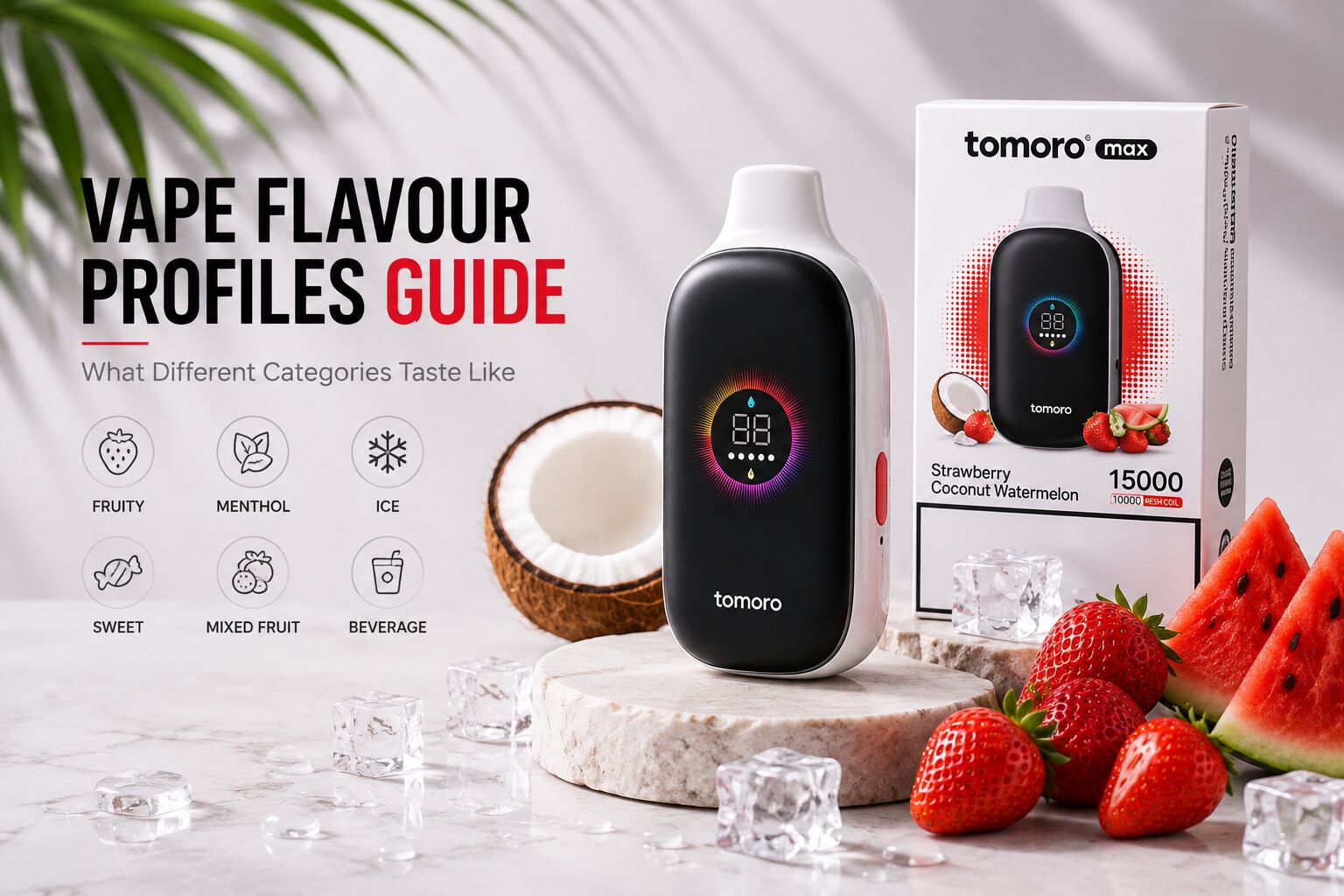
This guide explains the main Tomoro flavour categories commonly used in vaping products, including fruit, mint, cooling, sweet and mixed profiles. It is intended as general information for adults who want to understand how flavour descriptions work, rather than as a recommendation to use or purchase vaping products.
Fruit flavour profiles
Fruit flavours are one of the broadest categories.
Some are designed to taste like a single fruit, such as mango, grape, watermelon or blueberry. Others combine several fruits to create a more complex flavour.
The main difference between fruit flavours is often the balance between sweetness and acidity.
For example, citrus based flavours may have a sharper taste, while flavours based on watermelon or ripe mango may taste sweeter. Berry profiles can sit somewhere between the two, depending on the blend.
Manufacturers may also add cooling ingredients to fruit flavours. This can change the overall experience, even when the main flavour name stays the same.
A product labelled “mango ice”, for example, will usually taste different from a plain mango flavour because the cooling element becomes part of the overall profile.
Mint and menthol flavours
Mint and menthol flavours focus more on cooling sensations than sweetness.
Mint flavours may have a fresh or herbal character, while menthol tends to produce a stronger cooling sensation.
The terms are sometimes used together, but they are not always identical.
A flavour labelled “fresh mint” may have a softer taste than one labelled “strong menthol” or “extra ice”.
Cooling strength can also affect how other flavours are perceived. A strong cooling effect may make a sweet fruit flavour seem less rich, while a light cooling effect may simply add a fresh finish.
What does “ice” mean in a vape flavour?
“Ice” usually refers to a cooling sensation rather than the flavour of ice itself.
It is commonly added to fruit, drink and sweet flavour profiles.
Examples might include watermelon ice, grape ice or berry ice.
The strength of the cooling effect can vary between products. There is no universal standard for terms such as “ice”, “cool”, “freeze” or “chill”, so two products using similar names may feel quite different.
This is why flavour names should be treated as descriptions rather than precise measures.
Sweet and dessert style flavours
Some flavours are designed around sweet foods rather than fruit.
These may include profiles inspired by candy, cream, vanilla, custard or other desserts.
Sweet profiles can feel richer than simple fruit or mint flavours because they often include several flavour notes.
For example, a berry dessert flavour may combine a fruit taste with cream or candy style sweetness.
These products can also use names that are more creative than descriptive, which can make it harder to know what the flavour will actually taste like.
Reading the full flavour description, where available, can give more information than relying on the product name alone.
Mixed fruit flavours
Mixed flavours combine two or more fruit profiles.
Common combinations may pair sweet fruits with sharper ones. A blend might combine mango with pineapple, or berries with citrus.
The aim is usually to create a layered flavour rather than a single dominant note.
However, the flavour named first is not always the strongest. Product names are mainly used for identification and marketing, so they do not necessarily show the exact balance of each ingredient.
Some mixed fruit flavours also include mint or cooling ingredients, adding another layer to the profile.
Beverage inspired flavours
Another common category is flavours based on drinks.
These can include profiles inspired by soft drinks, lemonade, energy drinks, fruit drinks or similar beverages.
Beverage style flavours often combine sweetness, acidity and cooling.
For example, a lemonade inspired flavour may include citrus notes, sweetness and a cooling finish.
These flavours do not contain the original drink simply because they share its name. The name usually describes the intended flavour profile.
How flavour names can be misleading
There is no standard system for naming vape flavours.
Terms such as “blue”, “rainbow”, “tropical” or “fusion” may mean different things depending on the manufacturer.
A tropical flavour might contain mango and pineapple in one product, while another may combine passionfruit, guava and citrus.
The same applies to terms such as “ice” or “freeze”. They indicate a cooling effect, but they do not show exactly how strong that effect will be.
Checking the manufacturer’s description can provide more context, although taste remains subjective.
Why the same flavour can taste different between brands
Two products labelled with the same flavour can taste quite different.
This happens because manufacturers use different flavouring formulas, ingredient ratios and cooling agents.
Device design can also affect flavour perception.
Factors such as airflow, coil design, temperature and vapour output may influence how strong or sweet a flavour seems.
As a result, a watermelon flavour from one brand may not taste the same as watermelon from another.
Flavour perception is personal
Taste varies from person to person.
A flavour that seems very sweet to one person may feel mild to another. Cooling sensations can also feel stronger or weaker depending on the individual.
Previous exposure to certain flavours can influence perception as well.
Because taste is subjective, flavour descriptions should be viewed as general guides rather than guarantees.
A note on vaping and health
Understanding flavour categories does not remove the health risks linked with vaping.
Vape aerosols can contain nicotine and other substances, and nicotine can be addictive. Health authorities generally advise people who do not currently smoke or vape not to start.
Laws and restrictions around vaping products also vary by location. In Australia, access to vaping products is regulated, so adults should check current health guidance and local requirements.
Final thoughts
Vape flavour names are best understood as broad descriptions.
Fruit flavours often focus on sweetness or acidity, mint and menthol focus on cooling, dessert flavours tend to be richer, and mixed profiles combine several flavour notes.
Terms such as “ice”, “freeze” and “tropical” can help describe the intended experience, but they are not standardised.
The most useful approach is to read flavour descriptions carefully and remember that taste can vary between products, brands and individuals.
